
Today we will embark on a chilling journey through the twisted corridors of the psychological horror videogame, Layers of Fear.
Plot Overview: A Journey Through Madness

Layers of Fear introduces us to a painter, whose sole purpose is to finish his magnum opus.
As players, we navigate the ever-changing Victorian mansion that reflects the artist’s fractured psyche. The plot thickens with each brushstroke, uncovering the layers of the character’s troubled past. It’s a descent into madness, where reality warps and twists around us, challenging our perceptions.
The game cleverly uses the environment to tell its story, with each room in the mansion revealing a piece of the haunting narrative. As the plot progresses, the distinction between hallucination and reality blurs, leaving us to question what’s truly happening in the painter’s mind. This psychological horror videogame artfully combines visual storytelling with interactive gameplay to create a compelling narrative that keeps us guessing until the very end.
Setting: A Haunting Masterpiece

The setting of Layers of Fear is as much a character as the painter protagonist himself. The Victorian mansion, with its grandeur and decay, sets the perfect stage for this horror narrative. Corridors stretch and contort in impossible ways, doors vanish, and ghostly whispers fill the air, crafting an atmosphere thick with dread. The attention to detail is meticulous—peeling paint, ominous portraits, and flickering candles all contribute to the mansion’s eerie ambiance. Each room is a new chapter in the painter’s disturbed mind, and the game leverages this setting to play on our deepest fears. The mansion is not just a backdrop; it’s an active participant in the story, with its transformations and secrets pivotal to the unfolding plot. As players explore the dimly lit halls, the sense of isolation and the unknown is palpable, making the setting a haunting masterpiece in its own right.
Characters: Puppets in a Nightmare

Within the ominous walls of the mansion, the characters of Layers of Fear are like puppets ensnared in the artist’s dark reverie. The protagonist, a tormented painter, is the pivot around which the game’s psychological horror revolves.
His descent into insanity is echoed by the other characters—ethereal apparitions and voices from his past that guide or mislead. Their presence is fleeting, yet their influence on the painter is profound, shaping the narrative and his reactions. Each character we encounter is a fragment of the protagonist’s memories and guilt, adding layers to the story and deepening the mystery. They are crafted to challenge our understanding of the painter’s reality, often leaving us to wonder if they are simply figments of his imagination. The characters in Layers of Fear are essential to the psychological tension, as they are the mirrors reflecting the painter’s fragmented psyche.
Character Development: Realistic Fears and Actions
In Layers of Fear, character development is a subtle yet powerful force that drives the narrative forward.
The protagonist’s personality is revealed through his fears and actions, which evolve in response to the game’s terrifying events. His progression feels genuine; each layer of his past that’s peeled back exposes more of his vulnerability and madness. The way he interacts with the environment and reacts to the supernatural occurrences is consistent with someone who’s grappling with deep psychological issues. This realistic portrayal ensures players remain invested in his journey.
The supporting characters, although less prominent, also contribute to the unsettling atmosphere. Their development is seen through the protagonist’s perspective, which may distort their true nature but enhances the overall feeling of unreliability and suspense. The game successfully weaves these characters’ actions and fears into a believable tapestry of horror, where their responses to the unfolding events feel convincingly human.
Plot Structure: Predictable or Palpably Suspenseful?

The plot structure of Layers of Fear is a deliberate labyrinth designed to disorient and ensnare the player in its suspenseful grip.
The linearity of traditional storytelling is abandoned in favor of a more organic, exploratory progression that mirrors the confusion in the protagonist’s mind. This approach to narrative may not be entirely unpredictable to seasoned horror aficionados, yet it’s the way the story is told that keeps the tension high.
The game masterfully crafts a sense of dread with unexpected twists and turns, playing on the fear of the unknown. Puzzles and clues scattered throughout the mansion compel players to piece together the troubled history of the painter, which only deepens the mystery. This non-linear plot structure, while occasionally veering towards the predictable, is ultimately successful in maintaining a palpable sense of suspense that keeps players on the edge of their seats.
Central Theme: Tapping into Common Fears

The central theme of Layers of Fear is the exploration of common fears that resonate deeply within us all.
The game delves into the psychological horror of losing one’s grip on reality, the fear of failure, and the dread of what lies hidden in our past. These universal fears are personified through the crumbling psyche of the protagonist and the haunting environment of the mansion. The narrative taps into the fear of the unknown, using the painter’s incomplete masterpiece as a metaphor for the unfinished business in our lives that haunts us.
The game’s ability to evoke such primal fears is a testament to its carefully crafted atmosphere and storytelling. This connection to common fears ensures that the horror experienced in Layers of Fear is not just superficial; it lingers, prompting a deeper reflection on our own anxieties and insecurities.
Striking the Right Atmosphere
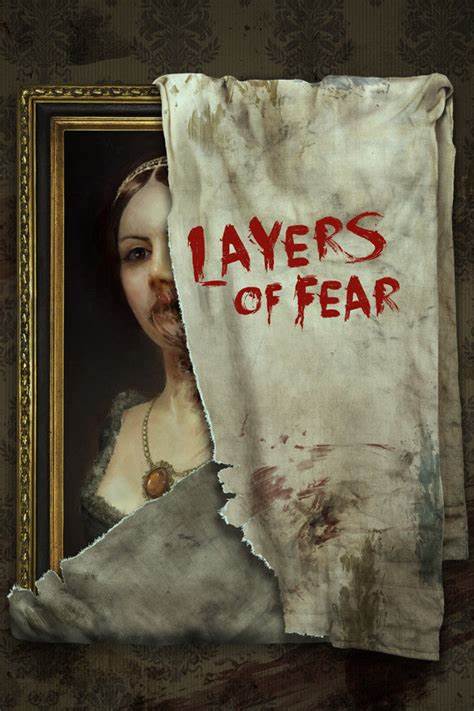
The atmosphere in Layers of Fear is crafted with a meticulous eye for detail that sets the perfect stage for horror.
The game strikes the right mood by balancing visual aesthetics with sound design to create an enveloping sense of dread. Creepy sound effects and a haunting soundtrack complement the decaying elegance of the Victorian mansion, while the play of light and shadow enhances the feeling of claustrophobia. This careful construction of the setting is not just for ambiance; it’s a deliberate mechanism that serves the game’s narrative and psychological impact.
The atmosphere keeps players on edge, never quite sure what horror waits in the next room or lurking in the shadows. By striking this balance, Layers of Fear ensures that the mood is not just a passive backdrop, but an active element that contributes to the overall experience of fear and suspense.
High Stakes
The stakes in Layers of Fear are gradually revealed as the narrative unfolds, becoming increasingly obvious and pressing. It is not just about completing a painting; it is about the protagonist’s quest for redemption and the unraveling of his sanity.
The game does an excellent job of making these stakes feel personal to the player. The sense of urgency is subtly woven into the gameplay through the protagonist’s interactions with his environment and the fragmented pieces of his past he discovers along the way. As the layers of the story are peeled back, what is at risk grows clearer—the possibility of losing oneself entirely to madness. The game ensures that players are acutely aware of the high stakes by making the consequences of the protagonist’s actions and decisions increasingly dire. This heightened awareness of what’s on the line is a driving force that compels players to see the journey through to its haunting conclusion.
Can We Relate to the Main Character?

In Layers of Fear, establishing a connection between the player and the main character is key to the game’s immersive experience.
Despite the protagonist’s descent into madness and the surreal setting, players find common ground in his human vulnerabilities and fears. The game’s first-person perspective enhances this connection, as players see through the eyes of the character, feeling his trepidation and uncertainty firsthand.
The personal nature of the narrative, with themes of loss, obsession, and the pursuit of perfection, allows players to empathize with the protagonist, even if his reality is far removed from their own. The psychological depth of the character is a bridge to the player’s own experiences and emotions, making the horror of Layers of Fear not just observed, but deeply felt. This connection is pivotal to the game’s success in drawing players into its dark and twisted world.
Gameplay Experience: Worth the Nightmares?
The gameplay experience of Layers of Fear is one that will stay with players long after they’ve turned off their game.
The adventure through the haunted mansion is as mentally taxing as it is terrifying, with puzzles and narrative elements that are as engaging as they are challenging. While the game may not offer the jump scares that some horror fans crave, it delivers a psychological terror that creeps under your skin and lingers. The interactive elements require not just quick reflexes but also a willingness to dive deep into the protagonist’s disturbed mind. The artful blend of story and gameplay mechanics makes the experience worth the virtual nightmares it may inspire. Ultimately, Layers of Fear is a rich, atmospheric journey that’s as compelling as it is horrific, and for those who appreciate a good psychological thriller, it is indeed worth the nightmares.
A Must-Play for Horror Enthusiasts

Layers of Fear stands out as a must-play title for horror enthusiasts. Its strength lies in its ability to weave psychological horror elements into every facet of the game, from the unsettling atmosphere to the depth of the main character’s descent into madness.
The videogame doesn’t rely on traditional horror tropes or cheap scares; instead, it offers a journey through the human psyche, filled with suspense and a haunting narrative that leaves a lasting impression. The game is a testament to the horror genre, proving that fear can be evoked through atmosphere and storytelling as effectively as with monsters and gore. For those who revel in the thrill of uncovering dark secrets and navigating through mind-bending scenarios, Layers of Fear is an exceptional experience that validates the power of interactive horror storytelling.
 Katie Marie Robinson-Sherlock
I’d love to hear what you think, please comment below.