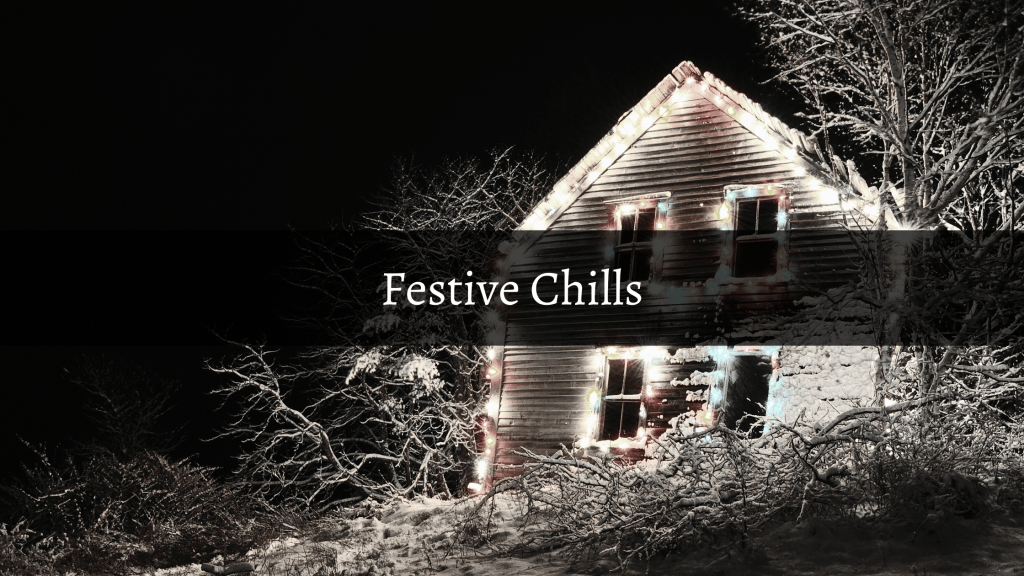
The festive season is traditionally a time of joy and celebration, but it also has a darker, more mysterious side that beckons to those intrigued by the macabre. Enter the world of supernatural Christmas tales and thrillers, where holiday cheer meets spine-chilling horror.
These dark Christmas tales and Christmas thriller films weave narratives that challenge the conventional festive spirit, offering a thrilling blend of Christmas horror and suspense. From ghostly apparitions haunting snow-draped villages to sinister entities lurking under the twinkling lights, the fusion of holiday horror stories with festive elements creates a uniquely eerie atmosphere.
Join me as we delve into the spooky holiday season, exploring how horror in literature and horror movies for Christmas captivate and delight fans of the supernatural.

Origins of Dark Christmas Tales
The roots of dark Christmas tales date back centuries, intertwining folklore and cultural narratives that have long associated the winter season with otherworldly events. In many traditions, the long, cold nights of winter were seen as a time when spirits could cross into the world of the living. This belief gave rise to chilling stories told around the hearth, meant to entertain and warn. Charles Dickens’ “A Christmas Carol,” published in 1843, is perhaps the most iconic example, weaving a ghostly tale of redemption against the backdrop of Victorian Christmas.
However, long before Dickens, European folklore featured figures like Krampus, a horned creature who punished misbehaving children, contrasting sharply with the benevolent Saint Nicholas. These stories served as moral lessons cloaked in fear, ensuring good behavior while tapping into the universal human fascination with the supernatural. Thus, the tradition of dark Christmas tales was born, merging festive cheer with spectral fear.
Notable Holiday Horror Stories
Holiday horror stories have captivated readers with their ability to blend festive elements with the uncanny. Among the most famous is M.R. James’ “The Story of a Disappearance and an Appearance,” where the festive backdrop of a Christmas puppet show is the setting for ghostly occurrences.
Another chilling tale is Susan Hill’s “The Woman in Black,” which, although not set directly during Christmas, evokes the eerie spirit of winter through its fog-laden landscapes and haunting narrative. In more contemporary literature, “NOS4A2” by Joe Hill explores a sinister version of Christmasland, offering a nightmarish twist on holiday joy.
These stories, along with others like “The Turn of the Screw” by Henry James, leverage the contrasts between light and dark, joy and fear, to create compelling narratives. They remind audiences that even the most joyous times can harbor shadows, inviting readers to explore the dual nature of the holiday season through the lens of horror.
Supernatural Christmas on Screen: Iconic Christmas Thriller Films
Christmas thriller films have carved a unique niche, combining festive elements with suspense and horror.
A standout in this genre is “Black Christmas,” a 1974 film that introduced audiences to the concept of holiday slasher films. Far removed from the usual seasonal cheer, it uses the backdrop of a college dorm at Christmas to deliver suspense and terror.
Another notable film is “Gremlins,” which infuses horror-comedy with holiday chaos, as mischievous creatures wreak havoc during the season. More recently, “Krampus” has gained recognition, drawing on the sinister folklore of its titular character to explore themes of family and festive expectations.
These films often use the contrast between the innocence of Christmas and the malevolence of their plots to heighten suspense. By placing horror within the context of the holiday, they challenge audiences to rethink the boundaries of traditional festive storytelling, turning Christmas into a season of unexpected thrills and chills.
Modern Horror Movies for Christmas
In recent years, modern horror movies for Christmas have expanded the genre, pushing boundaries and exploring new ways to unsettle audiences. Films like “Rare Exports: A Christmas Tale” offer a fresh take, blending Finnish folklore with dark humor and suspense to uncover the sinister side of Santa Claus. Another contemporary entry is “Better Watch Out,” which skillfully subverts the home invasion trope with a Christmas setting, offering unexpected twists that keep viewers on edge. “The Lodge,” released in 2019, takes a psychological approach, setting its chilling narrative in a snowbound retreat during the holiday season, where family tensions and supernatural elements intertwine.
These films are not just about scares; they delve into themes of family, tradition, and the darker aspects of human nature, all framed within the holiday context. By doing so, they redefine what Christmas horror can be, appealing to horror enthusiasts who crave both thrills and thought-provoking narratives during the festive season.

The Spooky Holiday Season: The Appeal of Christmas Horror
The appeal of Christmas horror lies in its ability to juxtapose the warmth and joy of the festive season with elements of fear and suspense. This blend creates a unique atmosphere that can be both comforting and unsettling. For many, the contrast heightens the emotional impact of the narrative, making the scares more profound against a backdrop of holiday cheer.
Additionally, Christmas horror often explores universal themes such as family dynamics, traditions, and societal expectations, all of which can take on a darker tone when filtered through the lens of horror. The genre also taps into the ancient practice of telling ghost stories during the winter solstice, a time historically associated with the supernatural.
By merging these traditions with modern storytelling, Christmas horror captivates audiences looking for something different from the typical holiday fare. It offers a thrilling escape, allowing viewers and readers to experience the festive season from a fresh, spine-chilling perspective.
Blending Cheer with Supernatural Frights
Blending cheer with supernatural frights creates a captivating dichotomy that is central to the allure of Christmas horror. This fusion not only amplifies the tension but also transforms familiar holiday settings into landscapes of dread.
The festive elements—twinkling lights, snow-covered grounds, and joyous music—serve as a backdrop that contrasts sharply with the lurking horror. This setting can make supernatural elements feel more intrusive and unsettling, as they invade a world typically associated with safety and comfort. By injecting horror into these spaces, creators challenge the audience’s perceptions, making them question what lies beneath the surface of holiday traditions.
This narrative strategy also allows for deeper exploration of themes such as isolation, fear of the unknown, and the duality of human nature. The unexpected blend of joy and terror captivates those seeking unconventional narratives, offering experiences that are at once familiar and thrillingly unexpected, ensuring that the holiday season is anything but predictable.
 Katie Marie Robinson-Sherlock
I’d love to hear what you think, please comment below.