
In the haunting world of “Late Night With the Devil,” viewers are transported to a chilling 1970s television set where the boundaries between reality and the supernatural begin to blur.
This film expertly marries the tension of a live broadcast with eerie supernatural horror, leaving audiences on the edge of their seats as they watch a seemingly routine talk show spiral into chaos.
Set against the backdrop of media sensationalism, this narrative delves into the psychological horror that grips both the characters and the viewers, challenging them to discern where entertainment ends and real terror begins. As the host battles inexplicable events, the film invites us to explore the sinister depths of our fears, making us question the true cost of our fascination with the macabre.
Join me as we dissect the stylistic choices and thematic layers of this 1970s film review, offering an in-depth film analysis of a story that dares to turn a mirror on our darkest curiosities.

The 1970s Context
The 1970s was a transformative era for cinema, marked by a shift towards more daring and unconventional storytelling. Supernatural horror gained a foothold in this period, challenging societal norms and exploring complex themes. Films from this era often pushed the boundaries of what audiences expected, blending reality with the supernatural to evoke fear and curiosity.
In “Late Night With the Devil,” this blend is evident. Set against the backdrop of a 1970s television set, the movie draws upon the era’s fascination with the unknown and the macabre. The stylistic choices reflect the period’s penchant for suspense and psychological depth. The film’s use of a talk show format echoes the societal hunger for sensationalism, mirroring the actual media landscape of the time.
This context allows the film to exploit the era’s unique tension between burgeoning media influences and traditional horror elements. The result is a chilling narrative that resonates with contemporary audiences while invoking nostalgic fears. Such a setting offers a rich tableau for exploring themes of fear, reality, and the supernatural.
Blurring Reality on Live Television
“Late Night With the Devil” thrives on blurring the lines between reality and fiction, a hallmark of supernatural horror. The film’s live television setting heightens this effect, creating a tense atmosphere where every moment feels unpredictably real.
As viewers, we’re invited to question the authenticity of events unfolding on screen. The live broadcast format intensifies this uncertainty, pushing the boundaries between staged spectacle and genuine terror. This approach draws from the era’s fascination with live television and its potential for unexpected, unscripted moments.
The blending of genres enhances the horror, leaving audiences guessing. By integrating seemingly mundane talk show elements with inexplicable supernatural occurrences, the film taps into a primal fear of the unknown. The seamless transition between reality and horror engages viewers, compelling them to confront their understanding of both.
This deliberate blurring is not just a narrative device but a reflection on media consumption. It poses critical questions about our perception and the power of media to shape reality. Such exploration is at the heart of the film’s suspenseful storytelling.

A Chilling Narrative Unfolds
The narrative of “Late Night With the Devil” unfolds with meticulous pacing, drawing viewers into its sinister embrace. As the story progresses, the tension escalates, creating a palpable sense of dread.
The plot twists and turns, keeping audiences engaged. Each revelation adds layers to the story, deepening the mystery and enhancing the supernatural horror. The film’s structure ensures that viewers remain on edge, eagerly awaiting the next terrifying development.
As the host navigates the escalating chaos, the film explores the personal and collective fears that emerge. This exploration is not just about the supernatural but also about the psychological toll of confronting our deepest anxieties. The narrative becomes a mirror, reflecting our darkest curiosities and the cost of indulging them.
This chilling progression is crafted with an expert balance of suspense and revelation. It invites viewers to delve deeper, challenging them to discern the true source of the horror. Such storytelling keeps audiences invested, eager to unravel the narrative’s many layers.
The Thin Line Between Entertainment and Terror
The film “Late Night With the Devil” artfully critiques the delicate balance between entertainment and actual terror, a theme central to its narrative. Media sensationalism is portrayed as a double-edged sword that captivates and manipulates audiences.
Television during the 1970s was a burgeoning force, shaping public perception and often blurring the lines between reality and entertainment. The film mirrors these dynamics, using the talk show format to illustrate how easily entertainment can slip into the realm of fear. The host’s struggle mirrors society’s fascination with the macabre, questioning the impact of media on public consciousness.
As the narrative unfolds, viewers witness the consequences of sensationalism. The film poses critical questions about the ethical responsibilities of media creators and consumers. By intertwining entertainment with genuine terror, it challenges us to reflect on our consumption habits and the potential consequences.
This commentary offers a powerful lens through which to view our media-saturated world. It compels audiences to consider the true cost of sensationalism, both on a personal and societal level.
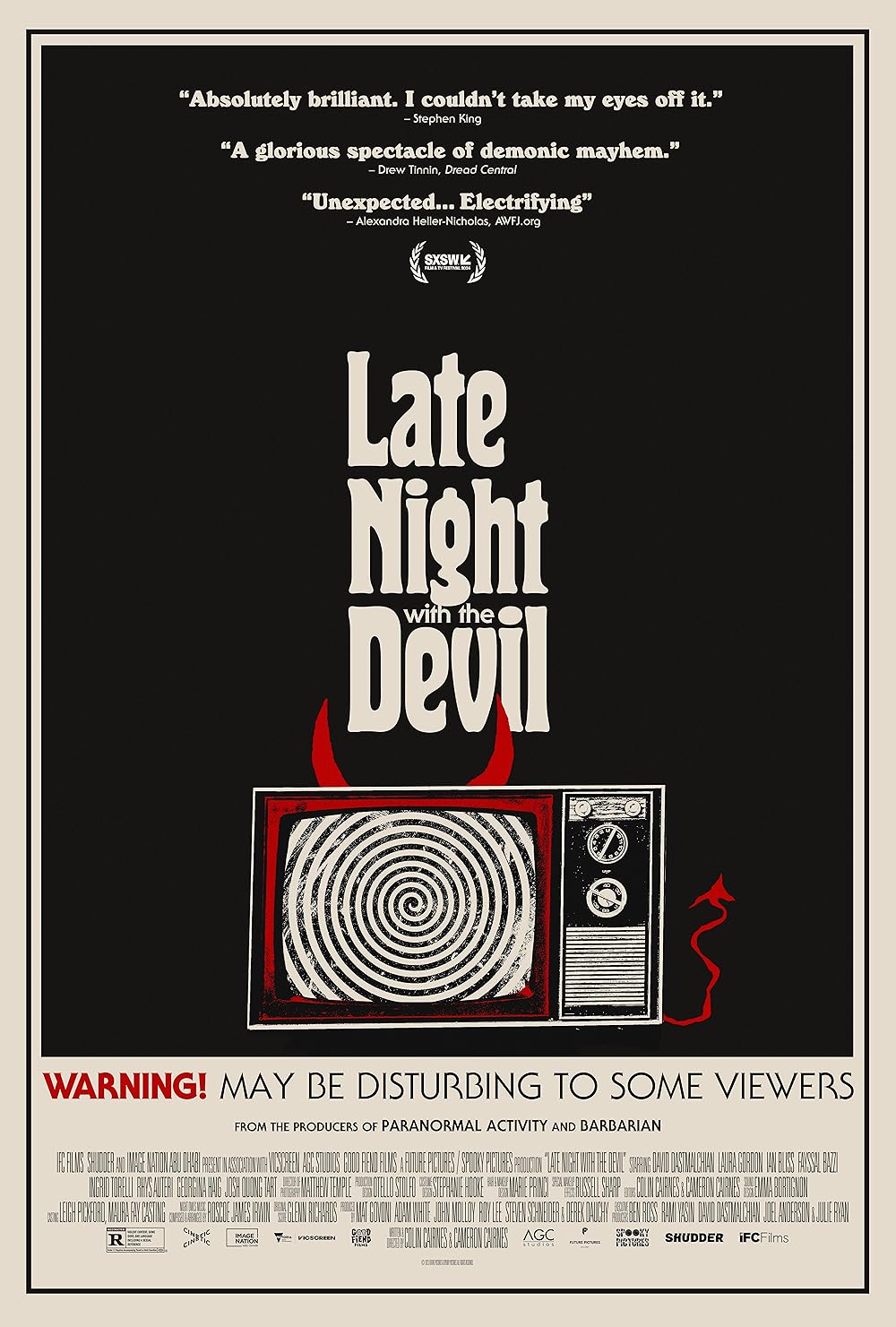
Analysing the Talk Show Format Twist
The use of a talk show format in “Late Night With the Devil” is a clever twist that enhances the film’s critique of media sensationalism. This format, familiar and comforting, becomes a vehicle for the supernatural horror that ensues.
The talk show setup lulls viewers into a false sense of security. The familiar banter and predictable structure are disrupted by unexpected supernatural events, heightening the film’s impact. This disruption mirrors how media can unexpectedly shift from benign entertainment to fear-inducing spectacle.
The juxtaposition of the ordinary with the terrifying underscores the film’s themes. It questions the authenticity of media presentations, probing the gap between what is shown and what is real. The talk show twist also reflects on the power dynamics inherent in media, highlighting the host’s role as both entertainer and unwitting participant in the unfolding horror.
This analysis reveals the depth of the film’s commentary. By utilizing a familiar format with a supernatural twist, it invites reflection on the media’s role in shaping perception and reality.
Commentary on Society’s Dark Fascinations
“Late Night With the Devil” delves into society’s darker fascinations, using supernatural horror to explore our collective curiosity about the macabre. This exploration is woven throughout the film, offering a commentary on the allure of fear.
The film taps into the universal fascination with the unknown, drawing viewers into its eerie narrative. As the story unfolds, it examines the psychological appeal of supernatural horror, highlighting how fear captivates and repels simultaneously. This duality is at the heart of the film’s commentary, challenging audiences to examine their consumption of horror and sensational media.
By portraying characters who are both terrified and intrigued by the unfolding events, the film mirrors our complex relationship with fear. It raises questions about why we seek out terrifying experiences and the impact of indulging these curiosities.
This commentary is both a critique and an invitation to reflect. It encourages viewers to consider the psychological and societal implications of their fascination with the macabre, offering a nuanced perspective on the genre.

Confronting Fears on Screen
The film’s psychological horror elements emerge as characters confront their deepest fears on screen. This confrontation is depicted with chilling clarity, drawing viewers into the characters’ emotional turmoil.
Each character’s journey is marked by a personal battle against the unknown. The supernatural events serve as a catalyst, forcing them to face their insecurities and fears. This introspection adds depth to the narrative, making the horror more personal and relatable.
Through these confrontations, the film explores the nature of fear itself. It delves into how individuals react under duress, revealing both vulnerability and resilience. This exploration of fear is a central theme, offering a psychological lens through which to view the supernatural horror.
As characters grapple with their fears, the film invites viewers to reflect on their own. It poses questions about the nature of fear, the unknown, and the human capacity to endure. This introspective journey is both haunting and enlightening.
Host’s Reality Unraveled
The unraveling of the host’s reality is a pivotal element in “Late Night With the Devil.” As supernatural events escalate, the host’s grip on reality loosens, creating a compelling psychological portrait.
The host’s descent is portrayed with meticulous attention to detail. Each moment of doubt and fear is captured, highlighting the psychological toll of facing the unknown. This unraveling is both metaphorical and literal, reflecting the broader themes of the film.
As the host’s reality fractures, the film delves into the psychological impact of confronting the supernatural. It explores how fear can distort perception, blurring the lines between reality and illusion. This exploration offers insights into the human psyche, revealing how easily reality can be manipulated by fear.
The host’s journey is both a cautionary tale and a mirror for viewers. It challenges us to consider our perception of reality and the impact of fear on our understanding of the world.
Exploring the Mind’s Darkest Corners
“Late Night With the Devil” invites audiences to explore the darkest corners of the mind, using supernatural horror as a lens. This exploration is both unsettling and illuminating, shedding light on the complexities of human psychology.
The film delves into the subconscious, examining how fear manifests in the mind. It portrays the mind as both a sanctuary and a prison, where fears can take root and grow. This duality is central to the film’s exploration, highlighting the power of the mind in shaping our perception of reality.
As the narrative unfolds, viewers are drawn into this psychological landscape. The film poses questions about the nature of fear and the mind’s ability to both protect and betray. This exploration offers a rich tapestry of psychological insights, revealing the intricate interplay between fear, perception, and reality.
Ultimately, the film challenges audiences to confront their fears and understand the mind’s role in shaping their experiences. This introspective journey is a powerful reminder of the complexities of human psychology and the enduring allure of supernatural horror.
 Katie Marie Robinson-Sherlock
I’d love to hear what you think, please comment below.