In the eerie cornfields of rural America, Stephen King’s “Children of the Corn” beckons readers into a chilling narrative where the innocence of childhood is ominously twisted by the dark roots of fanaticism. As we traverse the haunting tale of a couple who unwittingly enter a desolate town ruled by sinister, childlike zealots, we unravel King’s brilliant tapestry of psychological horror and supernatural dread. Through his masterful storytelling, King not only evokes spine-tingling fear but also delves deep into the psyche, exploring themes of childhood trauma and the perilous consequences of blind devotion.
Join me as we dissect this iconic piece of horror literature, uncovering the layers of terror and societal critique that make “Children of the Corn” a timeless exploration of human fears and frailties. Read more about the themes of “Children of the Corn”.
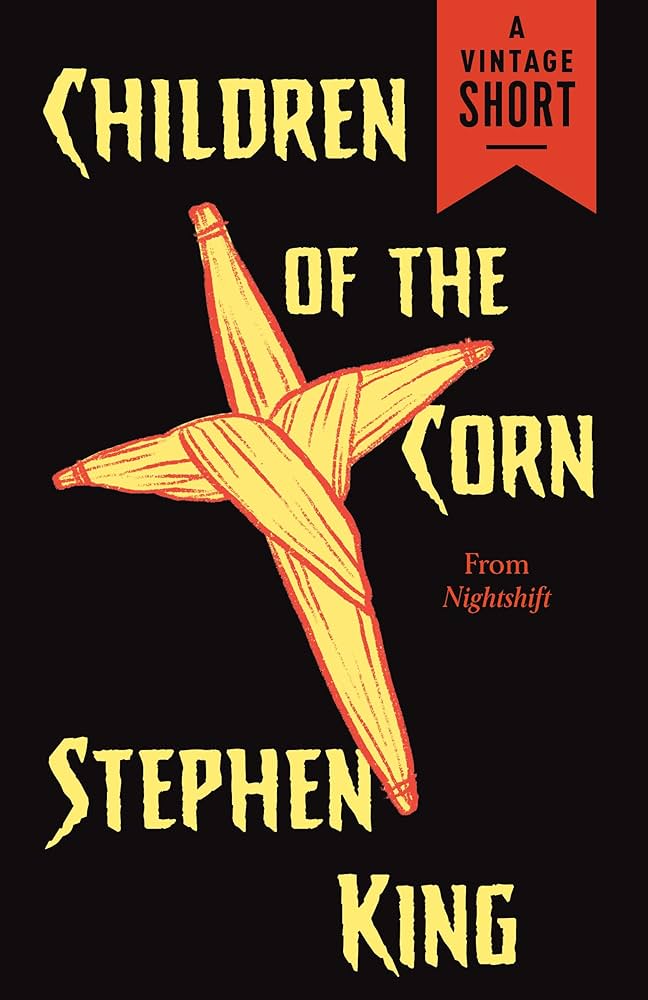
The Lure of Supernatural Horror
Supernatural horror is a genre that taps into our primal fears. In “Children of the Corn,” King creates a world where unseen forces manipulate reality. This approach draws readers into an unsettling realm where the normal rules of the world no longer apply. Stephen King leverages the eerie setting of rural America to enhance the feeling of unease, making the supernatural elements even more plausible.
The presence of the malevolent entity known as “He Who Walks Behind the Rows” adds a layer of terror. This being is never fully explained, which heightens the tension. Readers are left to imagine the full extent of its powers, feeding the fear of the unknown.
In this way, King’s narrative creates an atmosphere of pervasive dread. The supernatural horror elements serve as a catalyst for the psychological unraveling of the characters, drawing in those fascinated by the macabre.
Fanaticism in Literature
Fanaticism is explored deeply in “Children of the Corn,” providing a critique of extreme belief systems. The children in the story worship a dark entity, showcasing the dangers of unchecked devotion. King uses this fanaticism to reflect societal issues, such as how blind faith can lead to the erosion of personal morals and ethics.
The children, led by the charismatic Isaac, demonstrate how easily fanaticism can take root. Their complete obedience to the malevolent deity highlights the loss of individual thought. This is a terrifying exploration of how ideology can warp innocence and lead to violence and terror.
A real-world parallel can be drawn to cults and extremist groups. These both exhibit similar patterns of behavior. The story serves as a cautionary tale about the perils of surrendering one’s autonomy to a cause without questioning its morality.

Childhood Trauma in the Cornfields
Childhood trauma plays a significant role in shaping the narrative. The children in the story are not just victims of their environment but also perpetrators of violence. Their experiences reflect how trauma can manifest in destructive ways.
King illustrates how childhood experiences can be twisted by external influences. The children’s belief in the evil entity stems from a place of fear and manipulation. This highlights how vulnerable young minds can be to corruption and fanaticism.
This theme resonates with readers who understand the long-lasting impacts of childhood trauma. In the story, the cornfields become a symbol of lost innocence. They represent a childhood twisted beyond recognition by external, malevolent forces.
The Isolation of the Rural Midwest
The rural Midwest setting is crucial in establishing the story’s sense of isolation. This geographic isolation magnifies the characters’ psychological isolation. The vast cornfields become an oppressive force, reflecting the desolation felt by the protagonists.
King uses this setting to underscore the loneliness and helplessness of the characters. Cut off from the outside world, they are left to face their fears alone. This isolation amplifies the horror, as there is no escape from the malevolent forces at play.
The story explores how isolation can exacerbate psychological distress. It serves as a metaphor for the internal landscapes of the characters, where fear and hopelessness rule unchecked.
Blind Devotion and Its Dangers
Blind devotion is a key theme in the story, highlighting its potential dangers. The children’s unwavering faith in “He Who Walks Behind the Rows” is a critique of how unquestioned allegiance can lead to moral decay.
King illustrates how such devotion strips individuals of their ability to think critically. The children’s actions are dictated by their beliefs, leading to a cycle of violence and destruction. This serves as a warning against the consequences of surrendering one’s will to a higher power without scrutiny.
- Unquestioned faith leads to a loss of personal autonomy.
- Cults and extremist groups serve as real-world parallels.
- King’s narrative warns of the potential for fanaticism to corrupt innocence.
Innocence Lost in a Chilling Narrative
The loss of innocence is a poignant theme throughout the story. The children, once symbols of purity, become instruments of horror. This transformation is a powerful commentary on how innocence can be corrupted by external influences.
King masterfully portrays this descent into darkness, making readers question the nature of innocence itself. Is it something that can be preserved, or is it inevitably lost in the harsh realities of life?
- The cornfields symbolize the twisted nature of lost innocence.
- The chilling narrative reflects the harsh realities of growing up in a world ruled by fear.
- King prompts readers to reflect on how innocence can be protected in society.
For more insights into King’s themes, you can explore further here and here.
 Katie Marie Robinson-Sherlock
I’d love to hear what you think, please comment below.