
In the heart of European folklore lies a creature that contrasts sharply with Santa’s cheerful demeanor. Krampus, with his fearsome appearance, serves as a reminder of the consequences of misbehavior during the festive season. This section delves into the origins of Krampus and how he fits into the broader tapestry of holiday monsters.
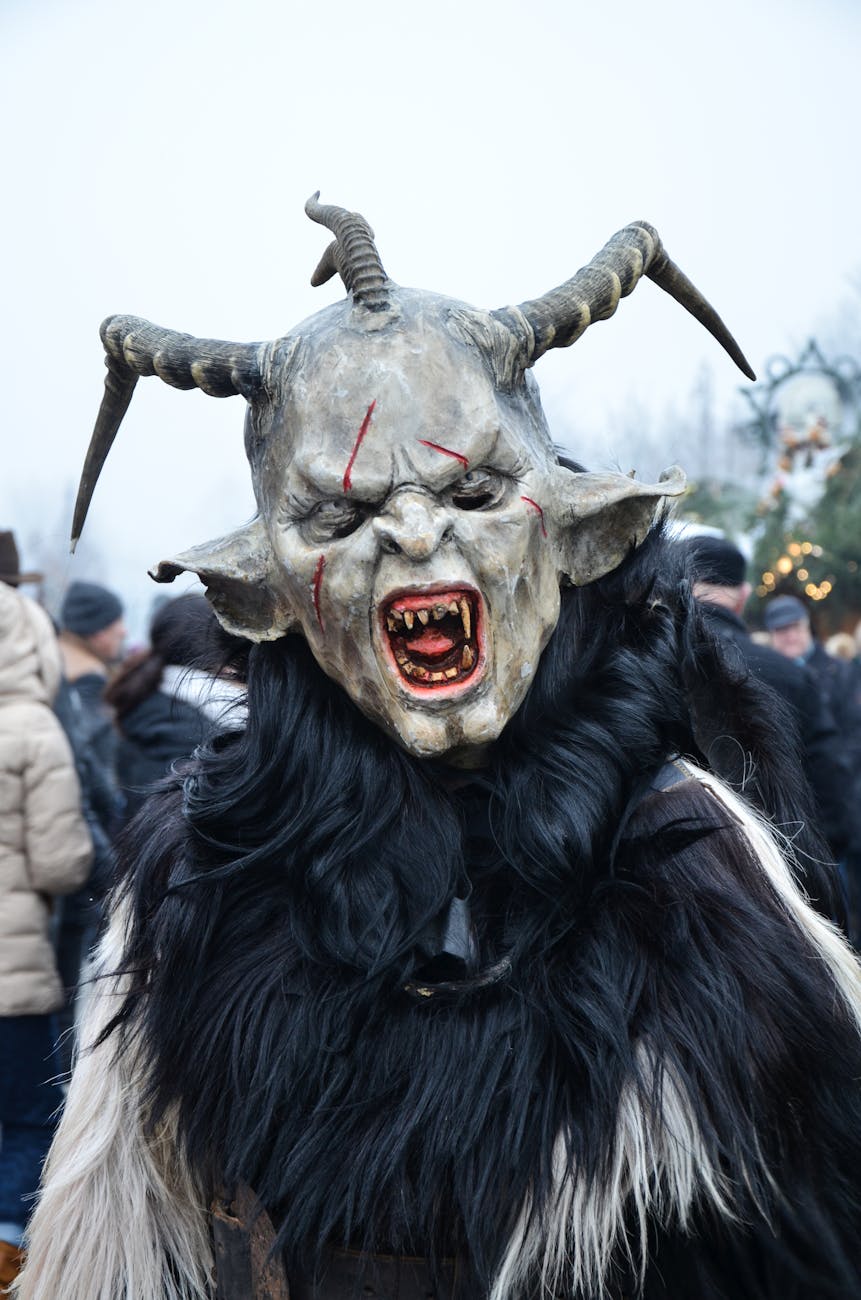
The Legend of Krampus
Krampus is a horned, anthropomorphic figure known for punishing naughty children during the Christmas season. Traditionally depicted as a half-goat, half-demon, Krampus is the antithesis of the benevolent Saint Nicholas. Originating in Alpine folklore, Krampus is a central figure in many Yule traditions, where he is said to roam the streets on the night before December 6th—St. Nicholas Day.
The creature’s roots can be traced back to pre-Christian traditions. Pagan rituals celebrated him as a symbol of winter’s darkness. Over time, the Catholic Church attempted to suppress the Krampus legend, deeming it a pagan holdover. Yet, Krampus endured, evolving into a festive figure that symbolizes the balance between reward and punishment.
In recent years, Krampus has gained popularity beyond Europe, especially in the United States. This resurgence has been fueled by cultural fascination and media portrayals. Various sources, such as American Ghost Walks, delve into how this fearsome figure captivates imaginations and keeps the legend alive.
Krampusnacht: A Night of Frights
Krampusnacht, celebrated on December 5th, marks the eve when Krampus sets out to punish the wicked. This night, steeped in tradition, involves parades and festivities where people dress as Krampus, wearing elaborate costumes and masks. It’s a spectacle that mingles fear with excitement, celebrating Krampus through a blend of performance art and folklore.
In Austria and Germany, Krampusnacht is a time when young men participate in “Krampuslauf,” a parade where they run through the streets, often accompanied by bells and chains, creating a cacophony intended to both entertain and frighten. These events offer a stark contrast to the joyous celebrations of St. Nicholas Day, highlighting the duality of the season.
Modern interpretations of Krampusnacht have kept the tradition alive and thriving. As UCF News notes, this event has crossed cultural boundaries, leading to the establishment of Krampus-themed gatherings in cities worldwide.
For those intrigued by the darker side of Christmas, Krampusnacht provides a unique opportunity to engage with historical customs and explore the rich tapestry of holiday monsters.

Witches of Yuletide
Throughout history, witches have been depicted as sinister figures linked to the supernatural. During the Yuletide season, they take on specific roles in various legends. In Italy, La Befana is a witch-like character who delivers gifts to children on Epiphany Eve, merging the mystical with the festive.
In contrast, the Icelandic Yule Lads, mischievous pranksters, share the season with their terrifying mother, Grýla, a giantess with witch-like traits. She is said to snatch misbehaving children, reinforcing the theme of moral behavior during Christmas.
The concept of witches during Christmas is explored in Amazon’s Krampus and the Old, Dark Christmas, illustrating how these figures serve as moralistic symbols, urging better behavior through fear.
For those fascinated by the supernatural, these witch tales offer a glimpse into how cultures intertwine folklore with festive traditions, maintaining a balance between fear and festivity.
Vengeful Spirits and Christmas Ghost Stories
Christmas ghost stories have a rich tradition, weaving tales of spectral visitors and eerie encounters. These stories, often told by the fireside, evoke a sense of mystery and wonder. The tradition of ghost stories during Christmas dates back to Victorian England, where figures like Charles Dickens popularized the genre with works such as “A Christmas Carol.”
Such tales serve as both entertainment and moral instruction, often illustrating the consequences of greed and selfishness. The ghosts in these stories typically convey messages of redemption, urging characters to reflect on their actions.
USA Today’s article explores how these ghost stories captivate audiences, blending the festive with the supernatural. These narratives offer a comforting familiarity while challenging us to contemplate deeper moral themes.
For readers interested in the macabre, Christmas ghost stories provide a perfect blend of holiday cheer and chilling suspense, ensuring their enduring popularity.

Cautionary Fables and Life Lessons
Cautionary fables are integral to Yule traditions, serving as moral compass points. These tales often feature characters who face dire consequences due to their misdeeds. Whether it’s Krampus punishing the naughty or Grýla devouring disobedient children, these stories emphasize the importance of good behavior.
Key elements of these fables include:
- Moral lessons: Emphasizing kindness and generosity.
- Consequences: Demonstrating the repercussions of negative actions.
- Cultural variations: Highlighting diverse interpretations across regions.
These fables resonate with audiences, encouraging reflection on personal values. As American Ghost Walks notes, they remain relevant today, reminding us of the importance of morality during the festive season.
By understanding these stories, we gain insight into how cultures communicate values through narrative, fostering a deeper appreciation for the holiday’s moral dimensions.
The Dark Christmas Tales’ Impact
Dark Christmas tales wield significant cultural impact, influencing how we perceive the holiday season. These stories, brimming with eerie themes, challenge conventional ideas of Christmas and provoke thought on societal norms.
Impact of these narratives includes:
- Reflection: Encouraging audiences to consider moral behavior.
- Cultural preservation: Maintaining traditions and folklore.
- Entertainment: Providing an alternative to conventional holiday narratives.
By exploring dark tales, we engage with a broader spectrum of Christmas traditions. As UCF News highlights, these narratives offer valuable insights into cultural practices and beliefs, enriching our understanding of the holiday’s multifaceted nature.
For those who seek a deeper connection to the season, engaging with these tales can enhance our appreciation of the holiday’s complex tapestry, blending light with shadow.
 Katie Marie Robinson-Sherlock
I’d love to hear what you think, please comment below.