
Are you ready to delve into the chilling history of the Ouija board?
This mysterious and enigmatic tool has fascinated and frightened generations, inviting us to connect with the unknown.
Join me on a haunting journey through the intriguing origins and spine-tingling tales associated with this infamous board. From its humble beginnings to its modern-day reputation, prepare to unlock secrets and encounter the supernatural in ways you never imagined. Get ready to summon spirits and uncover the dark mysteries of the Ouija board’s past.
A Tool for Communicating with the Afterlife?
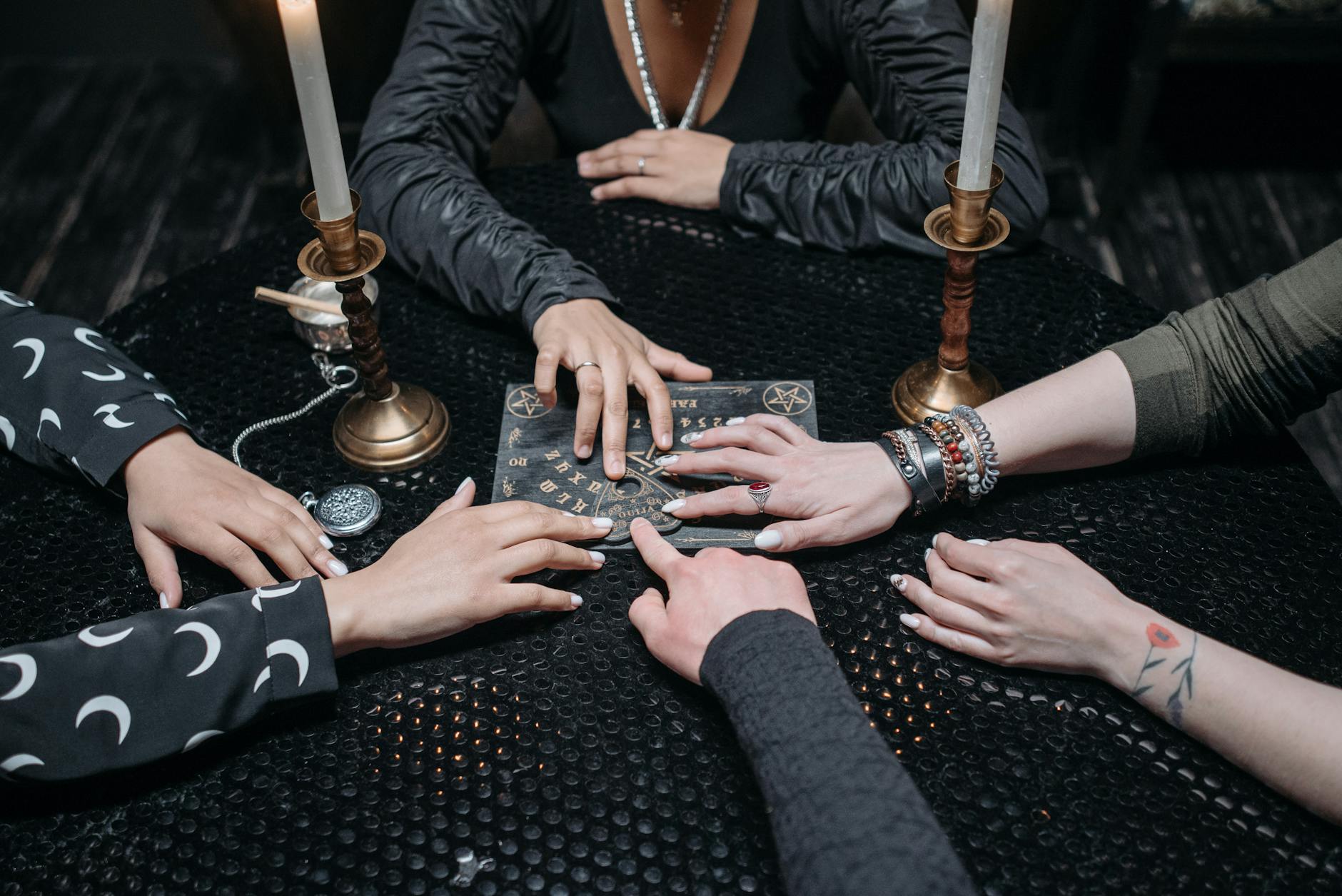
The Ouija board emerged in the late 19th century, an era captivated by spiritualism and the possibility of life beyond death. As seances and mediums gained popularity, people sought new ways to reach out to the departed. The Ouija board, with its letters, numbers, and simple “Yes” or “No” replies, offered a tangible means for individuals to seek answers from the great beyond. It promised an easy and direct line to the afterlife, where the living could converse with spirits.
However, its origins are not entirely clear. Some suggest it was a clever invention for entertainment, exploiting the era’s obsession with the afterlife. Others believe it was derived from ancient practices that similarly aimed to communicate with spiritual realms. What is certain is that the Ouija board quickly became synonymous with the supernatural, a gateway to a world unseen and a tool for those wishing to explore the unknown.
The Birth of a Supernatural Icon
The Ouija board transcended its parlor game beginnings to become a symbol of the supernatural. Patented in 1890 by businessman Elijah Bond, it was initially sold as a novelty, a “wonderful talking board” that could answer questions “about the past, present, and future with marvelous accuracy.” The board’s appeal lay in its mystique and the idea that anyone could tap into the otherworld without the aid of a medium.
As it penetrated popular culture, tales of strange occurrences during Ouija sessions began to circulate. It wasn’t long before it was featured in American newspapers, capturing the public’s imagination. The board’s design, with its planchette pointing to letters and numbers, became iconic, a representation of the human desire to explore the unknown.
By the early 20th century, the Ouija board was more than a game. It was a cultural phenomenon, emblematic of humanity’s age-old fascination with the spirit world.
From Pop Culture to Horror Movies

The Ouija board’s journey through popular culture has been nothing short of remarkable. Initially a household game, it found its way into the world of literature and cinema, often serving as a plot device that opens the door to the supernatural. Its cinematic debut came in the early films of the 20th century, but it was the 1973 blockbuster “The Exorcist” that cemented the Ouija board’s place in horror lore. The film’s portrayal of the board as a medium for demonic possession struck a chord with audiences and sparked a wave of fascination mixed with trepidation.
In the aftermath, the Ouija board became a staple of horror movies, symbolizing the unintended consequences of dabbling in the occult. It’s been featured in countless films, each time reinforcing its association with the eerie and the otherworldly. Today, its appearance on screen almost invariably signals the onset of supernatural events, thrilling viewers with the possibility of contact with the beyond.
The Ouija Board: A Dangerous Game?
The Ouija board’s place in the public consciousness is fraught with debate. To some, it remains a harmless game, a relic of a bygone era of parlor entertainment. Yet, for others, the board is a serious tool with potentially dangerous consequences. This divide has only deepened with time, as stories of spooky encounters and unexplained phenomena have proliferated.
Religious groups and supernatural believers often warn against its use, suggesting that it opens a portal to malevolent spirits. Critics argue that the ideomotor effect, where users subconsciously move the planchette, explains the board’s movements. Despite the skepticism, the Ouija board continues to be a subject of cautionary tales and is frequently cited in cases of supposed paranormal activity.
The controversy surrounding the Ouija board has only heightened its allure, making it an enduring object of fascination for those drawn to the mysteries of the spirit world.
The Science Behind the Ouija Board
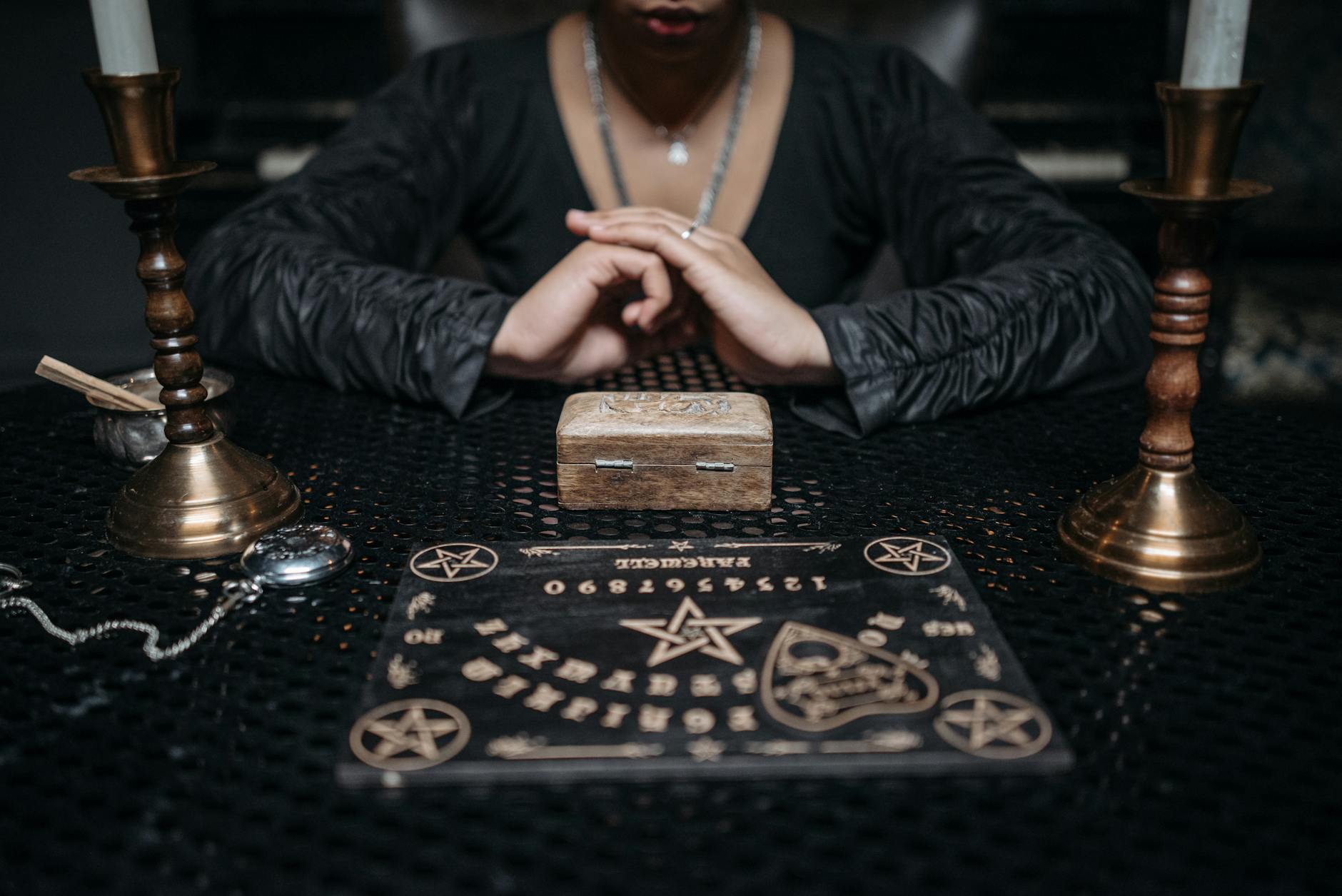
The enigma of the Ouija board has long intrigued scientists and skeptics alike. Scientific examination of the board often points to the ideomotor effect as the rational explanation for the planchette’s seemingly autonomous movement. This psychological phenomenon occurs when individuals make motions unconsciously, especially when they’re expecting or willing it to happen. Researchers suggest that players inadvertently direct the planchette towards specific answers due to subtle cues and expectations.
Studies have also explored the Ouija board as a tool for tapping into the non-conscious mind. In certain experiments, participants answered questions more accurately when using the board, implying access to knowledge not readily available to the conscious mind. While these findings don’t support the existence of supernatural forces at play, they do offer fascinating insights into the power and potential of the human psyche.
In essence, the science behind the Ouija board reveals as much about the inner workings of our minds as it does about our desire to believe in something beyond ourselves.
Personal Experiences: Real or Hoax?
Personal anecdotes about the Ouija board often blur the line between reality and fiction. Many individuals swear by their eerie experiences, claiming that the board facilitated genuine communication with the spirit world. These stories range from benign interactions to terrifying encounters, with some even alleging that the game had lasting supernatural repercussions on their lives.
On the flip side, skeptics argue that these experiences can be chalked up to the power of suggestion, heightened emotional states, and group dynamics that can make the ordinary seem extraordinary. The tension between believers’ convictions and skeptics’ explanations only adds to the Ouija board’s mystique.
The truth likely lies somewhere in the middle. While it’s hard to prove or disprove the supernatural, the personal narratives surrounding the Ouija board resonate deeply with human experiences of fear, curiosity, and the profound desire to connect with something greater than ourselves.


 Katie Marie Robinson-Sherlock
I’d love to hear what you think, please comment below.