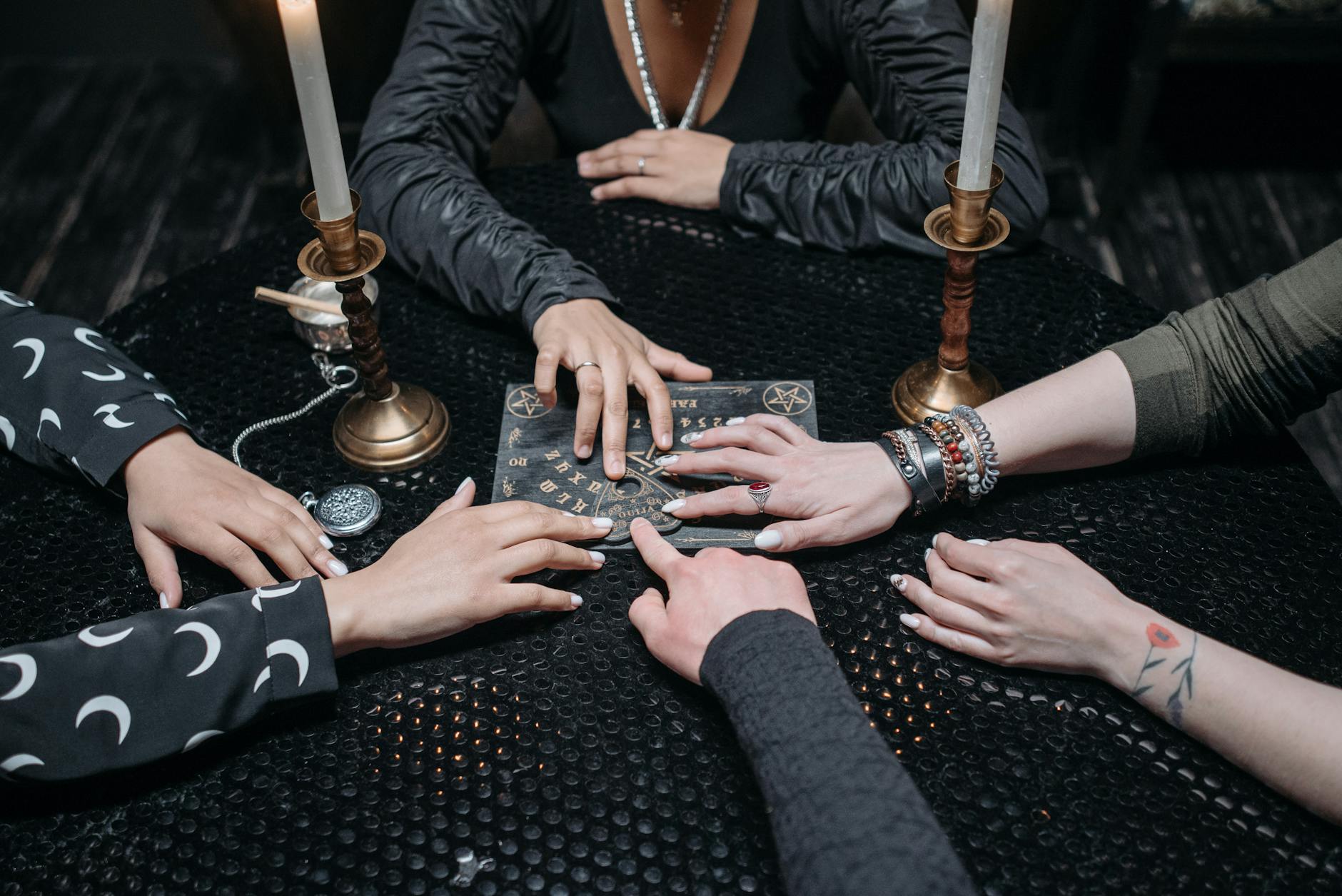
In the shadowy world of horror cliches, the act of summoning dark forces has become a staple narrative hook, often depicted with a familiar Ouija board and a group of unsuspecting thrill-seekers.
However, as TV horror tropes from classics like Charmed and Buffy the Vampire Slayer have shown us, there’s an opportunity for creativity in horror to breathe new life into these well-trodden paths.
Imagine a scenario where a character inadvertently calls up evil simply by mouthing ancient words, unleashing chaos without even realizing it. Such a twist not only revitalizes the chilling concept of calling up evil but also invites horror enthusiasts and creative writers to delve deeper into the genre’s potential.
Join me as we explore these innovative narrative spins that promise to captivate the imagination and keep audiences on the edge of their seats.
Unique Summoning Scenarios
Exploring creative summoning scenarios can transform the Ouija board from a predictable prop into a tool for unexpected horror. Imagine a story where the board becomes an artifact of immense power, one that accidentally activates through everyday actions.
A character might inadvertently summon dark forces by drawing patterns in the dust covering an old Ouija board, unaware of the consequences. Another scenario could involve a digital version of the board, where an app mimics the planchette’s movement, leading to sinister outcomes as technology merges with the supernatural.
Additionally, consider the board as a cursed object that triggers its summoning rituals when a specific word is uttered in its vicinity. These twists not only inject freshness into the narrative but also challenge characters to navigate the blurred lines between reality and the supernatural, keeping audiences guessing about what might happen next.
Subverting Classic Horror Cliches
To subvert classic horror cliches involving the Ouija board, one must blend familiarity with innovation. Instead of the typical group of friends gathered around the board, imagine a scenario where the board is used by a solitary character, seeking solace from grief.
This personal engagement with the supernatural allows for a deeper exploration of themes like loneliness and desperation. Another approach might involve flipping the expected roles—where the spirit itself is the one seeking help, turning the human into the unsuspecting medium.
The board could also trigger a series of events rooted in historical lore, connecting the present to a dark past that the characters must unravel. By reimagining these elements, stories can break free from predictable patterns, offering fresh perspectives and heightened tension. These inventive approaches breathe new life into the Ouija board narrative, ensuring it remains a captivating element in horror storytelling.

Lessons from Charmed and Buffy
Both “Charmed” and “Buffy the Vampire Slayer” have set benchmarks for creatively handling TV horror tropes. These shows cleverly balance horror elements with character development and humor, offering lessons in revitalizing traditional horror narratives. “Charmed” often incorporates familial bonds and personal dilemmas into its magical storylines, transforming summoning rituals from mere plot devices into catalysts for character growth.
Similarly, “Buffy” blends the supernatural with everyday issues, using its horror elements as metaphors for real-life challenges faced by its characters. These series demonstrate the power of integrating deep emotional arcs with classic horror cliches, elevating the genre beyond simple scares. By focusing on character-driven stories, they invite audiences to engage with the narrative on multiple levels, ensuring a more immersive and impactful viewing experience.
Writers can draw inspiration from these approaches to craft horror stories that resonate emotionally while still delivering the thrills and chills the genre promises.
Innovative Uses of Dark Forces
Innovative uses of dark forces in TV horror can captivate audiences by blending the supernatural with unexpected plot twists. Shows like “Charmed” and “Buffy the Vampire Slayer” have paved the way, often using dark forces as metaphors for real-world issues. For example, a character might inadvertently summon a malevolent entity by performing a seemingly benign act, such as reading a passage from an old book aloud. This twist adds layers of suspense, as the character must now navigate the consequences of their innocent actions.
Additionally, dark forces can be depicted as ancient, sentient beings with their own agendas, interacting with humans in unpredictable ways. These forces could manipulate time, alter memories, or even possess technology, merging traditional horror with modern elements.
By reimagining how dark forces operate within the story, writers can create fresh, compelling narratives that keep viewers intrigued and invested in the unfolding drama.

Accidental Evil: A Fresh Take
Accidental evil offers a fresh take in horror storytelling, turning the inadvertent summoning of dark forces into a rich narrative opportunity. This concept flips the usual deliberate intent of calling up evil on its head, introducing an element of unpredictability and tension.
Imagine a character who, in a moment of curiosity or carelessness, accidentally unleashes a malevolent force by humming a tune or solving an ancient puzzle. This unintended act sets off a chain of events that transforms an ordinary setting into a battleground between the mundane and the supernatural.
The beauty of accidental evil lies in its capacity to explore themes of responsibility, guilt, and redemption, as characters must grapple with the unintended consequences of their actions.
By focusing on these accidental invocations, writers can craft stories that are both relatable and chilling, inviting audiences to ponder the thin line between innocence and danger in the realm of the supernatural.
Engaging Audiences with New Twists
Engaging audiences with new twists in horror storytelling requires a blend of creativity and an understanding of classic horror elements. One effective approach is to subvert audience expectations by introducing unexpected consequences to familiar scenarios.
For instance, instead of dark forces being summoned through traditional rituals, consider a modern twist where a smartphone app inadvertently opens a portal to another dimension. This not only updates the narrative but also resonates with contemporary fears about technology.
Another tactic is to humanize the entities being summoned, giving them complex motivations and backstories that challenge the black-and-white morality often seen in horror.
By adding layers of emotional depth and unpredictability, writers can keep audiences on the edge of their seats. These innovative twists make the horror genre feel fresh and exciting, ensuring that viewers remain engaged and invested in the story’s outcome, eager to see what happens next.


 Katie Marie Robinson-Sherlock
I’d love to hear what you think, please comment below.