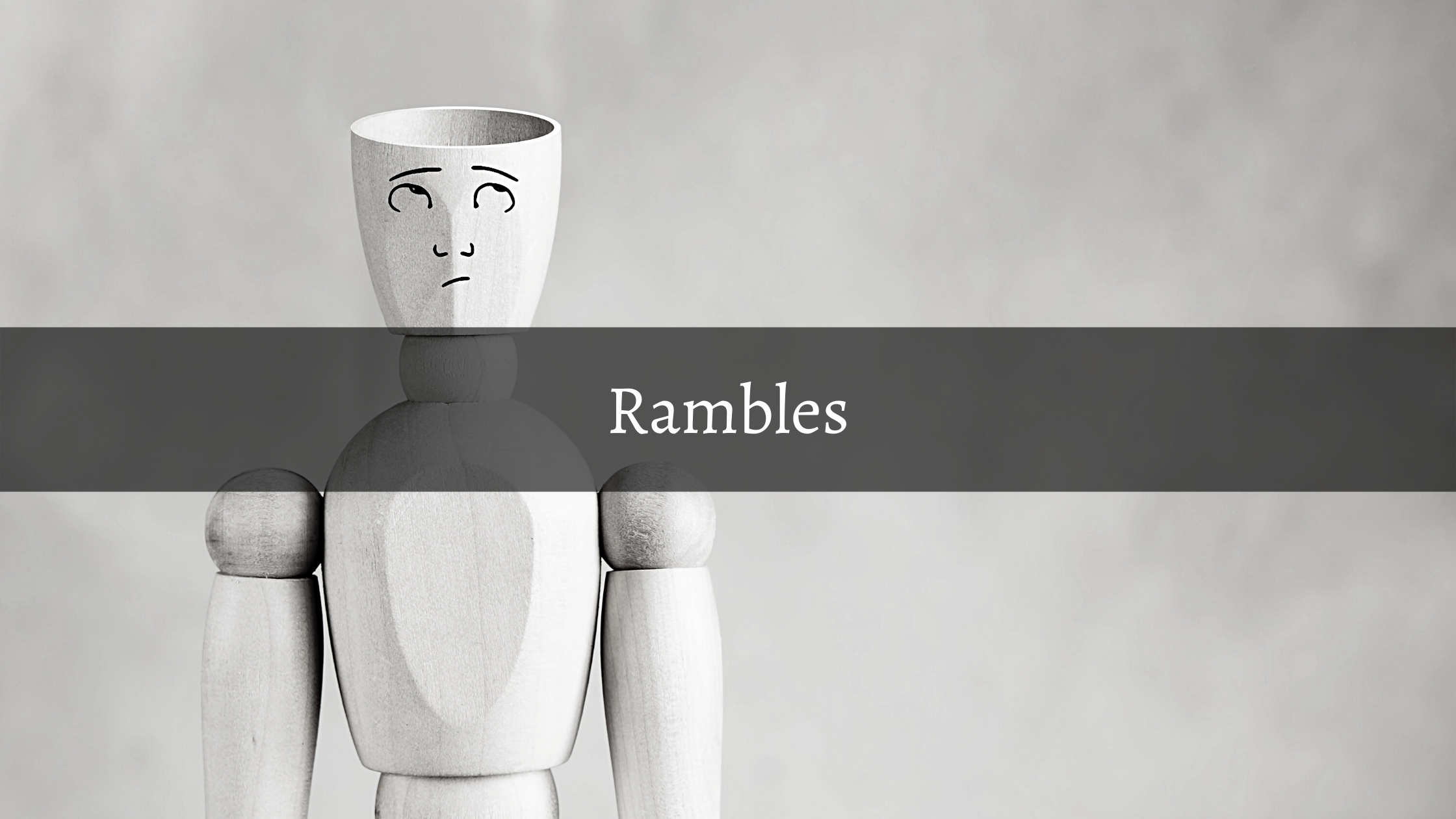

Today I want to talk to you about assumptions.
Assumptions are something that everyone will encounter at various times throughout their lives.
When you make an assumption, you tell yourself that something is true without actually having any evidence that it is.
They can be both internal, when you come up against your own assumptions, and external, when you come up against the assumptions of people around you.
Assumptions in real life.

As someone with dyslexia, I have encountered assumptions both internally within myself and externally from those around me. External assumptions tend to come up in one of two ways, sometimes someone will see the neurodiverse label and make assumptions about my capability before I’ve spoken to them. In other instances, usually when I’ve gotten to know someone, they are shocked to find out that I am neurodiverse, they assumed that I’m not based on their preconceived notions of what neurodiversity is, their unconscious bias.
While these external assumptions are clearly damaging, causing people with physical disability, long-term/chronic sickness, neurodiversity, and learning difficulties to not be seen by wider society; we should not ignore our own internal assumptions which can be just as damaging in a different way.
It’s all too easy to lead your life never questioning that you are assuming things to be facts.
- You don’t get the promotion at work, you must not be good at your job
- Your partner isn’t very talkative of late, they are angry with you
- You have a learning disability, you must not be capable
The brain might feel like it is hard-wired to make assumptions with the way it searches for patterns constantly, but many of our assumptions are learned behaviours that come from many places, our culture, our families, and what we were taught as a child.
We make our assumptions about others and ourselves unconsciously. They are our unconscious biases and they are disadvantaging us all.
- Assumptions damage our capacity to relate to others. If you are always assuming what others think and feel, you will stop listening and communicating with them.
- Assumptions block possibilities by impeding our ability to think creatively. If you assume there’s only one way to do something you stop looking for alternatives.
- Assumptions also create spirals of negative thinking and can damage our moods and mental well-being.
So assumptions are pretty bad, they negatively affect mental health, they impact of disadvantaged groups from a societal standpoint and they limit us as a whole.
Assumptions in Fiction
I have two points to make here.
My first point is as a writer who would like their stories to impact positively on the world around them as well as being entertaining. Assumptions and unconscious bias are one of the many reasons we need good, plausible representation in fiction and horror is the perfect genre for this.
In his Ted Talk Dr Steven Schlozman explains that horror is a mirror and by telling over-the-top horror stories we can confront parts of ourselves that would otherwise be uncomfortable and difficult to address. So what better genre than horror for us to address our own unconscious bias, our own assumptions about people who are different from ourselves?
So we’ve established that assumptions are bad for us and that horror is a wonderful opportunity for us to challenge certain assumptions and change our own subconscious bias.
My next point turns all that on its head, assumptions are great. Obviously, I’m messing with you here in an attempt at humour, but honestly, I feel a little bad wailing on assumptions and trying to figure out ways to destroy them. So I decided to find a positive about assumptions and the best I could do was this.
Assumptions are great to subvert.
Horror as a genre thrives on subverting expectations and assumptions. You assume a child is innocent? Booya, horrors going to have the kiddy murder a gazillion people. You think toys are cute and fun, booyah, murder toys. You see where I am going?
You can play with audience assumptions, as the horror genre often does. But you can also play with character assumptions, what does your character assume people are thinking, feeling, about to do? Could this lead to dramatic conflict? You bet your cute little behind it can.


 Katie Marie Robinson-Sherlock
Leave a reply to Andrew McDowell Cancel reply